 Sun Corridor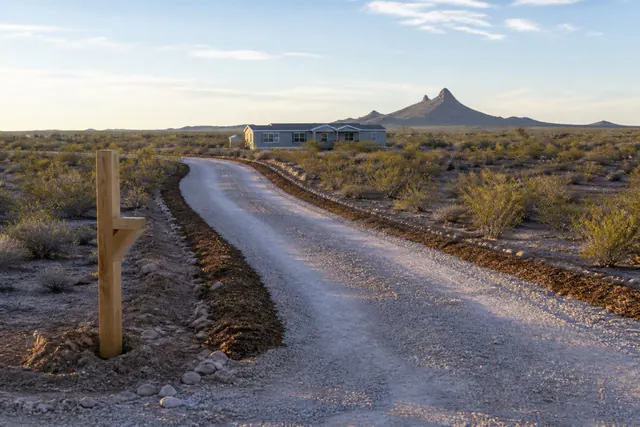
Sun Corridor Land Clearing connects Chandler property owners with a local land clearing contractor for access road & driveway clearing in Chandler and down the Sun Corridor.
Every rural parcel's first improvement is the way in. Access work on the corridor means cutting a drive corridor through creosote and mesquite from the section road to the build site, grubbing the woody crowns out of the running surface, and blading to a compacted caliche-and-loam surface sturdy enough that concrete trucks, well rigs, and home toters can all trust it. Done in that order, it is a fast, economical job; done as an afterthought, it is the reason delivery drivers refuse an address.
Route selection is the free money in this work. A drive that follows the parcel's natural high ground, crosses the wash at its narrowest stable point, and curves to put the house behind a visual screen of kept palo verdes costs little more to clear than a thoughtless straight shot — and saves real money every monsoon after. The walk-through before clearing settles the line, flags the protected plants the corridor must route around, and marks where culvert pipe belongs before water ever proves the point.
Surface strategy is refreshingly local: the same caliche that makes grubbing miserable makes a road base contractors elsewhere would pay to import. Ripped, sized, moisture-conditioned, and rolled, it produces a pale, hard running surface that sheds rain and holds up under daily traffic with an occasional blade dressing. Most corridor drives never need imported rock at all — just honest prep of what the parcel already owns.
Washes, culverts, and the monsoon test
Nearly every long drive south of Chandler crosses at least one shallow wash, and the crossing is where drives pass or fail. The rules of thumb: cross where the wash is narrow and its bed is firm, set pipe sized for the storm that happens every few years rather than the average one, and armor the outlet so the first big flow doesn't mine it out. Where a culvert is overkill, a hardened low-water crossing — a dip paved with compacted caliche or rock that water sheets over — is the traditional and often better answer. Monsoon climatology from the NWS Tucson office, which covers the Picacho end of the corridor, shows why crossings get designed for cloudbursts, not averages.
Never underestimate flowing desert water: a wash moving a foot deep will float debris into an undersized pipe and turn a drive into a dam. The clearing stage is the cheapest moment to get the hydrology right.
From two-track to real driveway: what each upgrade buys
Access work is usefully staged. Stage one — corridor cleared, crowns grubbed, rough blade — makes the parcel reachable for wells, surveys, and builders. Stage two adds engineered shape: crown or cross-slope for drainage, ditching where the drive runs in cut, compacted base through the soft spots. Stage three is surfacing and dressing — final caliche or gravel lift, mulched shoulders that keep the dust down and the desert-broom seedlings out of the running edge. Owners building over a year or two often buy the stages as needed rather than all at once, and the quote is structured to allow it.
Addressing and emergency access are worth checking early with your jurisdiction — driveway approach standards onto county roads, and the width and turnaround clearances fire apparatus need, both exist and both are easier to build in than retrofit. Pinal County publishes its development standards, and the Cooperative Extension covers rural-property basics for owners new to unincorporated land.
Further reading
Good to know
What does a quarter-mile driveway cost to put in?
Cleared and rough-bladed through light brush, it's a modest machine job; add heavy mesquite, a wash crossing with pipe, and full base compaction and it scales meaningfully. Route and vegetation density drive it, which is why every quote follows a walk of the actual line.
Does a driveway on my own land need any permits?
The drive itself on private ground is usually your business, but the approach where it meets a public road commonly needs an encroachment permit, and dust rules apply to the disturbance. The contractor identifies which apply to your parcel as part of scoping.
Caliche or gravel surface — which is better?
Well-built caliche is cheaper, locally sourced from your own ground, and genuinely durable; imported gravel wins where the native material runs sandy or where you want an all-weather surface with zero maintenance. Many drives run caliche base with gravel only on the wash approaches.
Can you keep trees along the drive for looks?
Absolutely — the best corridor drives are cleared selectively, keeping healthy palo verdes and mesquites back from the running edge for shade and screening. Anything overhanging truck height gets limbed; protected natives near the line stay and the corridor bends politely.
How wide should the cleared corridor be?
Twelve feet of running surface is a working minimum; sixteen to twenty of cleared width gives mirrors, deliveries, and fire apparatus comfortable room, with wider pockets at gates and turnarounds. Wider clearing also slows brush from reaching back over the drive.