 Sun Corridor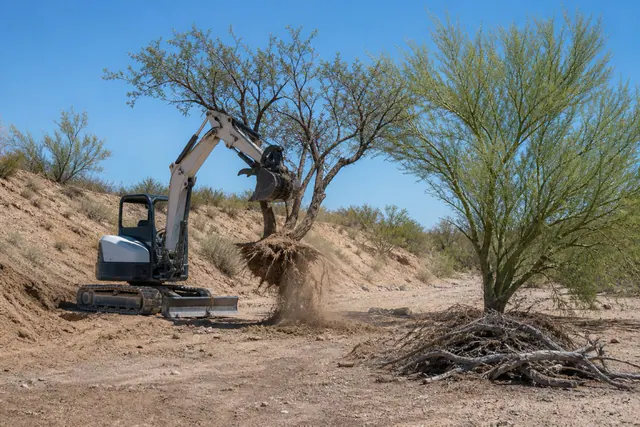
Sun Corridor Land Clearing connects Chandler property owners with a local land clearing contractor for mesquite & palo verde removal in Chandler and down the Sun Corridor.
Velvet mesquite and blue palo verde are the two trees every parcel owner in this basin eventually negotiates with. Mesquite spreads along washes and old field edges into dense, multi-trunked thickets armed with two-inch thorns; palo verde seeds prolifically after wet winters and grows fast enough to swallow a fence line in a few seasons. Removal work here is rarely 'clear everything' — it is deciding which trees earn their footprint, then removing the rest in the manner each species actually requires.
That last part is the craft. Mesquite cut at the trunk resprouts from the crown with enthusiasm, so a removal that needs to be permanent means grubbing the root crown — typically with an excavator working the taproot loose rather than a blade shoving the whole tree over. Palo verde is less stubborn at the stump but brittle overhead: mature ones shed heavy limbs in microburst winds, which is exactly why so many removals get called in each September after the monsoon has made the argument.
The debris plan is half the price. Thorny mesquite brush is miserable to handle and expensive to truck, so most jobs mulch the tops on site and haul only trunk wood — or leave it bucked for the owner, since mesquite is genuinely good firewood. And on every job, the protected natives sharing the parcel — saguaros threaded through a mesquite stand, an old ironwood on the fence line — are flagged and worked around, full stop.
Which trees to keep: a corridor owner's shortlist
A mature, well-placed velvet mesquite is thirty degrees of shade in a climate that hits 110°F, and a healthy blue palo verde in April bloom is the best-looking thing on most parcels. The keep list usually writes itself: single-trunk specimens with sound structure, positioned where shade lands on the house or corral in the afternoon. The removal list is the rest — thicket-grown trees competing into weak, leaning forms, volunteers hard against foundations and septic lines, and anything whose canopy overhangs a roof in monsoon country. The University of Arizona Cooperative Extension has solid homeowner guidance on desert tree selection and structure.
Thinning a bosque rather than leveling it also keeps the ground cooler and the soil held — a parcel stripped of every tree bakes, blows, and grows tumbleweed. Parcel-level soil maps from the USDA Web Soil Survey help show where shallow hardpan makes that cover especially valuable. The best-looking acreages down this corridor are the ones where somebody chose carefully.
Roots, regrowth, and doing it once
Mesquite's reputation for coming back is earned: the species resprouts from buds at and below the root crown, so any removal that stops at ground level is a pruning, not a removal. Permanent take-out means the crown comes up — cleanly, with the hole backfilled and compacted so it doesn't become a settling pocket. On old field edges where rows of volunteer mesquite followed an irrigation ditch, grubbing the whole line at once is dramatically cheaper than returning tree by tree over a decade.
Regrowth pressure is also seasonal: trees dropped in spring with soil moisture behind them resprout hardest. Scheduling major removals into the dry fall, then watching the following summer for volunteers, is the pattern that ends the war in one round. For what the weather is doing at scheduling time, the NWS Phoenix forecast office covers the Chandler end of the corridor.
Further reading
Good to know
What does taking out a big mesquite cost?
A single accessible tree cut to grade is usually a few hundred dollars; full grubbing with the root crown out, backfill, and debris off site costs more, and thicket clearing is priced by density rather than per tree. The itemized quote shows each piece so you can decide how permanent you need each removal to be.
Are mesquite and palo verde protected like saguaros?
Arizona's native plant law protects several tree species including ironwood and can cover palo verde and mesquite in some circumstances, with landowner notification required before clearing protected plants. The practical answer: the contractor checks what's on your parcel against the current state list before cutting, and saguaros and ironwoods are simply never touched.
Can I keep the wood?
Absolutely — mesquite is prized firewood and barbecue wood, and plenty of owners ask for the trunks bucked and stacked. It also cuts the haul-off line from your quote, which is the most expensive way to move a thorny tree.
My palo verde dropped a limb on the shed. Remove or prune?
Depends on the tree. Palo verdes with good structure take corrective pruning well; ones that grew fast and lanky in irrigated yards often keep failing limb by limb, and removal before the next microburst is the honest recommendation. A look at the tree settles it quickly.
Will removing a tree line change my dust situation?
It can — tree lines slow wind at ground level. Where a removal opens a long fetch of bare ground, the finish plan should include mulch cover or gravel on the exposed strip. That gets discussed in the quote, not discovered the following June.