 Sun Corridor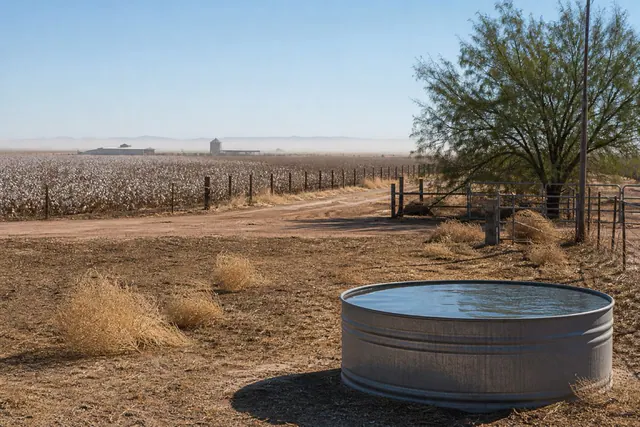
Sun Corridor Land Clearing connects Stanfield property owners with a local land clearing contractor for land clearing, brush removal, and lot clearing across the Stanfield area.
Stanfield is a farm crossroads west of Casa Grande — 558 residents at the 2020 Census, a school, and working ground in every direction: cotton and forage fields, dairy and feedlot operations, and ranchette yards strung along dusty section roads. Clearing needs here are the agricultural classics, at the scale of a community where everyone's parcel does a job.
The wind writes the maintenance calendar. Stanfield sits on an open plain with nothing to slow a west wind, so tumbleweed arrives by the fence-load every spring, dries into stacked fuel by June, and loads every pipe-rail corral and yard fence in the community. The standing work is knocking that cycle down: yards and lot edges mowed before cure, fence lines mulched clear so wire can breathe, and the odd fallow parcel cut before it becomes the neighborhood's seed source.
The rest is rural-holding upkeep — mesquite pushed back from stock tanks and pens, drives regraded after monsoon crossings wash, storm limbs cleared off barns after outflow events roll through, and homesite pads prepped for the manufactured homes that keep the community's next generation on family ground. It's unglamorous, essential work, done for owners who measure a contractor by whether the gate got closed behind the machine.
Tumbleweed economics: beating the annual invasion
Russian thistle runs a simple business model: germinate on any disturbed ground, grow all summer, die, detach, and mail itself to your fence. Breaking the cycle locally means cutting it green — before seed set — on your own parcel, and accepting that the neighbors' contribution arrives regardless, to be cleared from fence lines while it's loose and light. Owners who mow green and clear fences annually spend a fraction of what a once-every-three-years panic costs, and their corrals stop doubling as fuel storage. Species control detail is on the Arizona Cooperative Extension site, and the dry-wind days that turn stacked thistle into a fire mechanism show up in NWS Phoenix fire-weather products.
The under-fence pass matters most: thistle wedged into wire at ground level is what carries flame across a boundary. A mulched strip both sides of the wire is the cheap insurance.
Keeping a working yard workable
Stanfield's ranchettes earn their keep — animals, equipment, hay — and clearing serves the operation: pens kept clear of thorny regrowth that injures stock, sight lines open around gates where trucks swing, mesquite held back from waterers and shade structures where it competes for the same moisture, and the yard's dust managed by keeping ground covered rather than blading it raw. Jurisdiction is unincorporated Pinal County, whose weed and dust expectations apply out here just as they do closer to town; parcel soil behavior — this plain runs to fine sandy loam that lifts easily — is mapped on the USDA Web Soil Survey.
Bundling is the Stanfield way to buy this work: yard mow, fence lines, and the back parcel in one machine day costs meaningfully less than three separate visits, and most properties book it that way each spring.
Further reading
Good to know
What does a spring cleanup on a Stanfield ranchette cost?
A bundled day — yard and lot mowed, fence lines cleared, loose tumbleweed dealt with — is the economical pattern for a typical few-acre place. Heavier mesquite work or storm damage adds machine time. Quotes follow a quick walk or a good set of photos.
Can you clear around livestock safely?
Yes — pens get worked empty where possible, machines keep respectful distances where not, and thorny debris is removed rather than mulched where hooves will land. Tell the estimator what animals are on the ground and the sequencing accounts for them.
My fence is buried in dead tumbleweed — mow or hand-clear?
Both: the machine takes the mass off the line, and hand work pulls what's wedged in the wire. Cleared and then maintained annually, the fence stops being the community's thistle collector — the load drops visibly after the first proper year.
Do you prep pads for manufactured homes out here?
Regularly — family land splits around Stanfield generate them steadily. Clearing, a lifted compacted pad, and drive work come as one package, built to the setter's spec and the county's requirements.
Is dust control really enforced this far out?
The rules apply county-wide in a region with a federal dust problem, and more practically, the neighbors downwind are all farms and homes. Working method — mow high, mulch in place, water when blading — keeps both the county and the community satisfied.