 Sun Corridor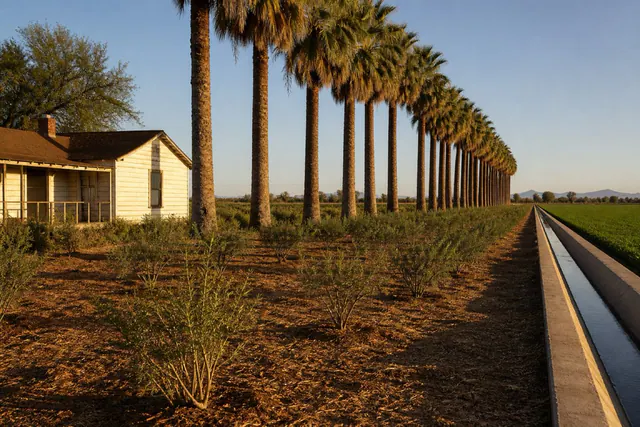
Sun Corridor Land Clearing connects La Palma property owners with a local land clearing contractor for land clearing, brush removal, and lot clearing across the La Palma area.
La Palma is a 1920s farm settlement in the irrigated country between Casa Grande and Coolidge, named — in the direct way of farm places — for the palms its founders planted, some of which still stand in tall windbreak rows over the old farmhouses. It's a small, quiet community of working parcels and family acreage, and its clearing work carries a century of agricultural layering in every job.
The signature La Palma task is the front-acres cleanup: an old farmhouse with its palm row intact, and the acres in front or behind gone to mesquite regrowth since the last time they were worked. The mulcher takes the regrowth back to clean ground in a day, the palm and athel windbreaks get assessed tree by tree — keepers pruned, hazards removed — and the parcel recovers the open, tended look the settlement's founders built it for.
Beneath every job runs the old irrigation logic: concrete ditches and standpipes along the field borders, buried pipe where rows once watered, and soil that a century of leveling and cropping left deep, flat, and valuable. Clearing here respects that infrastructure — locating it before machines dig, preserving what a future irrigator could use, and leaving the ground ready for whatever the family's next chapter is: replanting, horses, a homesite, or simply holding it clean.
Palms and athels: managing the settlement's living landmarks
The mature palms and athel rows over La Palma's farmyards are both heritage and maintenance items. Palms are structurally sound but accumulate decades of dead frond skirt — a genuine ember-catcher in fire season — and want periodic cleaning by people with the right equipment; athels, as everywhere in the old farm belt, grow brittle and shed in monsoon outflow. The assessment on a La Palma job walks each row: which trees anchor the property's character and get maintained, which are failing and come out, and what replanting keeps the windbreak function for the next fifty years. The Arizona Cooperative Extension covers both species' management well, and storm timing follows the NWS Phoenix monsoon calendar.
Fronds, limbs, and removal wood all leave as part of the job — a century-old yard deserves better than a debris pile in the corner.
Old ground, next uses: clearing with the future in mind
La Palma's deep, leveled soils make its fallow acres some of the most convertible ground on the corridor — to horse setups, gardens and small orchards, family homesites, or back to irrigated cropping where water arrangements allow. The clearing pass sets up any of them: regrowth mulched, woody crowns grubbed where permanence matters, the plow pan ripped where planting is coming, and the old borders either preserved for future irrigation or blended out for a homesite. Parcel soils can be read in advance via the USDA Web Soil Survey, and unincorporated-county questions — splits, permits, floodplain — run through Pinal County.
The quote conversation starts with the end use, because it changes the spec: 'clean and hold' is a different finish than 'ready to plant,' and paying for the right one the first time is the whole game.
Further reading
Good to know
Can you clean up my palms along with the land clearing?
Frond-skirt cleaning and windbreak assessment fold into a La Palma parcel job naturally — it's the same visit and often the same equipment. Genuinely tall palm work beyond machine reach gets scoped honestly, with the right method for the height.
What does the classic front-acres cleanup cost?
A few acres of mesquite regrowth mulched to clean ground takes a day or two of machine work at standard corridor rates — the settlement's flat, open ground works in your favor. Windbreak tree work adds per-tree line items you approve individually.
Should the old irrigation ditches be kept or demolished?
Keep them unless you're certain — sound concrete laterals are expensive to rebuild and cost little to leave in place. The clearing works around them by default, and demolition becomes its own decided line item when a homesite genuinely needs one gone.
Is this ground good for horses?
Very — flat, deep-soiled, and historically fenced. The conversion spec grubs mesquite crowns rather than mowing them (thorn regrowth and hooves don't mix), sweeps for old wire and pipe, and leaves an inspectable surface. It's a common La Palma conversion.
Do you find surprises on hundred-year-old parcels?
Regularly — buried pipe, old foundations, wire, the occasional forgotten well casing. The method assumes them: probe the likely lines first, work at appropriate speed, and flag anything found for the owner's decision rather than machining through history.