 Sun Corridor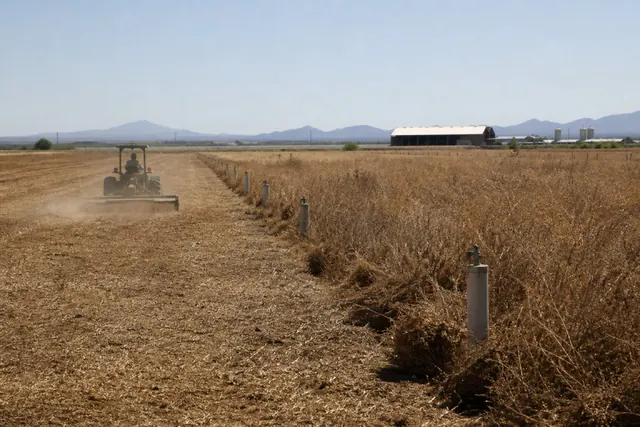
Sun Corridor Land Clearing connects Chandler property owners with a local land clearing contractor for pasture & acreage reclamation in Chandler and down the Sun Corridor.
Between Chandler's edge and Picacho, an enormous amount of ground is neither wild desert nor working farm — it is acreage that used to be something. Retired cotton and alfalfa fields gone to tumbleweed, horse pastures abandoned when the water bill won, homestead parcels where volunteer mesquite has been advancing on the house for fifteen years. Reclamation is the job of turning that ground back into usable land, and it is some of the most satisfying work in the catalog because the before-and-after is total.
Fallow field ground has its own archaeology. Under the weeds sit laser-leveled surfaces that are actually an asset — flat, deep, workable soil — but also border berms, concrete ditch stubs, buried gated pipe, and a compacted plow pan. The reclamation pass mows and mulches the growth, grubs the woody volunteers before they graduate from shrub to tree, knocks down and blends the old borders, and rips where compaction would otherwise leave the first irrigation or planting sitting in a bathtub.
What the ground becomes drives the finish. Horse and livestock use wants every mesquite crown grubbed — regrowth thorns and pastured animals are a vet-bill combination — and a smooth, inspectable surface. A future ag lease wants field edges square and turnable. A hobby orchard or big garden wants the plow pan broken deep. And a parcel being held for value simply wants to stop generating weed-complaint letters and start looking like land somebody owns on purpose.
Reading a retired field before the first pass
Walk the parcel before quoting it and the old farm layout announces itself: standpipes mark where the concrete lateral ran, a low diagonal ridge is the tail-water ditch, and the mesquites all stand in lines because they rooted along wet ground. Those features locate the buried hazards — pipe, valve boxes, wire — that machines need to know about, and they explain the drainage the reclamation has to respect, since a leveled field was engineered to move water in one direction and still does. Parcel soil data through the USDA Web Soil Survey fills in the rest of the picture, including where the hardpan runs shallow.
History helps too — this basin around Coolidge and Eloy has been irrigated farmland for a century, and most parcels have paperwork or neighbors who remember what was planted and where the pipe went. Ten minutes of that beats an afternoon of exploratory digging.
Keeping reclaimed ground reclaimed
The desert files a counterclaim on every reclaimed parcel, and the first two years decide the case. Tumbleweed and stinknet flush hardest into freshly disturbed soil — a light mow each spring while they're green costs little and prevents the seed bank from rebuilding. Mesquite volunteers reappear along the damp lines; an annual walk with loppers, or a quick machine touch-up, catches them at pencil size. Owners who put ground cover down — planted pasture where there's water, chip mulch or gravel where there isn't — hold their gains far longer than those who leave bare dirt, and bare dirt also feeds the dust problem this corridor already has. The Arizona Cooperative Extension publishes small-acreage management guidance written for exactly this situation.
A realistic maintenance plan is part of the original quote conversation: what the annual touch-up should cost, what triggers it, and which parts of the parcel can be left to go native on purpose. Reclamation that plans for year three is reclamation that lasts.
Further reading
Good to know
What does bringing a few acres of old field back cost?
Mowing and mulching light fallow growth is the cheap end; add grubbing scattered mesquite, ripping compaction, and knocking down borders and the per-acre number climbs. Most parcels quote as a base reclamation plus optional line items, so you can stage the spend.
Can the old irrigation system be saved?
Sometimes. Concrete ditches are often sound under the brush, and gated-pipe runs can be pressure-tested once located. Whether restoring them makes sense depends entirely on your water situation — a question worth answering before paying to preserve infrastructure you can't feed.
Is old farmland good ground for horses?
Generally excellent — flat, deep-soiled, and fenceable — once the mesquite is grubbed rather than mowed and any old wire and pipe is swept out. Thorn regrowth at hoof height is the thing to engineer out; that's why pasture jobs spec crown removal.
The county sent a weed notice for my fallow parcel. Does this service cover that?
Yes — a reclamation mow is exactly what those notices want to see, and the heavier restoration work can follow or not as you choose. Forward the notice with your request so the scope and the timeline match what was cited.
Will clearing it all make the dust worse?
Scraping it bare would; reclamation done right doesn't. Mowing to stubble, mulching in place, and re-establishing cover keeps the surface crusted and held. The dust rules in this corridor apply to acreage owners too, and the working method respects them.