 Sun Corridor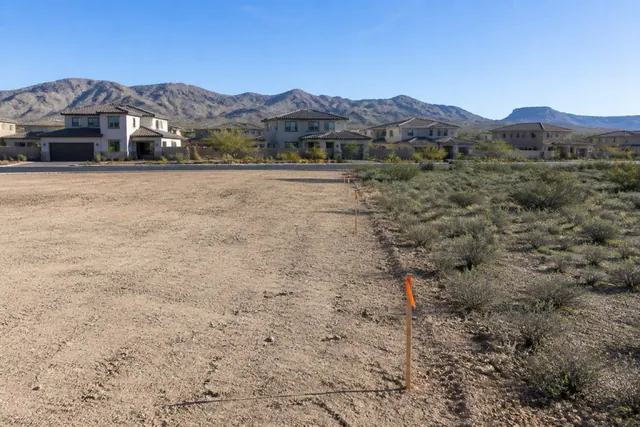
Sun Corridor Land Clearing connects Chandler property owners with a local land clearing contractor for lot clearing in Chandler and down the Sun Corridor.
Lot clearing is where the Sun Corridor's growth actually starts: the platted infill parcel on Chandler's south side, the acre in Arizona City bought for a manufactured home, the Casa Grande subdivision phase going in on a retired cotton field. The job is to take a parcel from raw desert or fallow farm ground to a clean, workable blank — brush and trees out, root crowns grubbed where the building will sit, debris mulched or hauled, and the whole thing left so a surveyor and a dirt crew can go straight to work.
Out here that means two very different starting points. Native desert parcels carry creosote, bursage, and mesquite over undisturbed crust, plus the occasional saguaro or ironwood that Arizona law protects — those get identified and flagged before anything with tracks arrives. Old farm ground is the opposite problem: no protected plants, but berms, buried irrigation pipe, concrete ditch stubs, and a laser-flat surface that hides a plow pan a ripper has to break before anyone can trench utilities.
The finish standard depends on what comes next. A future home pad wants full grubbing — every root crown out of the footprint so nothing decays and settles under a slab. The rest of the lot often does better mulched, with chips down to hold the dust until landscaping happens. Splitting the parcel that way, instead of scraping fence line to fence line, is usually the difference between a tidy quote and an inflated one.
Caliche: the layer every corridor lot owner meets eventually
Dig almost anywhere between Chandler and Picacho and a foot or three down you hit caliche — a white, cemented hardpan of calcium carbonate that can be as stubborn as lean concrete. It is why grubbing here is priced honestly only after a site walk: pulling a mesquite crown out of sandy loam is an hour's work, and pulling the same crown out of shallow caliche can mean ripper teeth and patience. The USDA Web Soil Survey maps these soil series parcel by parcel and is worth ten minutes before you buy, let alone before you clear.
Caliche is not all bad news — it compacts into a superb road base and many corridor driveways are bladed straight onto it. But it changes the tool list, and a clearing quote that never mentions it on ground where it is guaranteed to appear is a quote that will grow later.
Sequencing a lot from purchase to pad
The clean order is: survey and utility locates, protected-plant check, clearing and grubbing, then rough grading — with the dust obligations scoped before the first machine unloads, since disturbing more than a small area triggers control requirements in both counties this site serves. The City of Chandler and Pinal County both publish their development and permitting pathways; which one you deal with depends on which side of the county line your parcel sits.
Owners building south of the line should also budget for the practical gap between 'cleared' and 'buildable': fill to lift a pad above the surrounding flat, compaction testing, and a drive that can carry a concrete truck in monsoon season. Clearing done with that sequence in mind hands each following trade a site that costs less, which is the whole point.
Good to know
What should clearing a residential lot run around here?
A lightly vegetated quarter-acre infill lot is a different job from a densely wooded acre with grubbing and haul-off, so honest numbers run from around a thousand dollars to several thousand. The itemized quote separates clearing, grubbing, haul, and grading so you can trim scope to budget.
Is a permit required before I clear my own lot?
Clearing itself is often unpermitted on private residential land, but grading, dust control, and floodplain rules can each apply depending on acreage and location, and destroying protected native plants requires state notification regardless. Part of the quote conversation is flagging which of these your specific parcel triggers.
What happens to saguaros on a lot I want to build on?
They stay, and the site plan works around them — which is what nearly every owner ends up preferring anyway, since a mature saguaro adds real value. Where a protected plant sits squarely in the only build footprint, relocation is a state-regulated salvage process, not a clearing task.
Can you clear old farmland that's gone to weeds?
Yes — retired field parcels around Casa Grande, Eloy, and Coolidge are a large share of the work. Expect surprises like buried irrigation pipe and ditch concrete; a good operator probes for them early instead of finding them with a track at speed.
How long does a typical lot take?
A straightforward acre — mulch the brush, grub the pad, rough-level — commonly takes a day or two of machine time once equipment arrives. Dense mesquite, heavy caliche grubbing, or big haul-off volumes stretch that. The quote includes a schedule estimate for your parcel, not a generic one.